
Chapter 14: What It Takes to Start a Fight
Mother Jones did not wait for permission. Patrick Sarsfield did not wait for better odds. Andre and Mairade understood the same thing when they built The Wild Geese in 2001 against a category that had no place for them. You do not wait for the odds to improve. You trust the bearing. And you go.
Chapter 13: Mother Jones and the March of the Mill Children
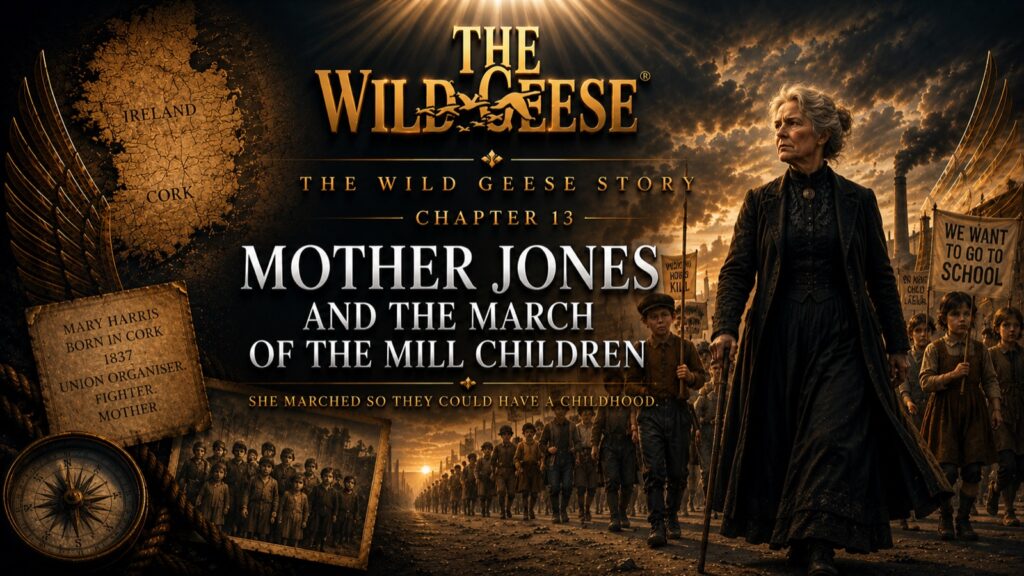
In July 1903, Mary Harris — born in Cork in 1837, better known as Mother Jones — led a march of child mill workers from Philadelphia to President Roosevelt’s door. She spent sixty years being arrested, threatened, and ignored by men who assumed she would stop. She did not stop.
Chapter 12: The Irish Brigade at the Battle of the Boyne
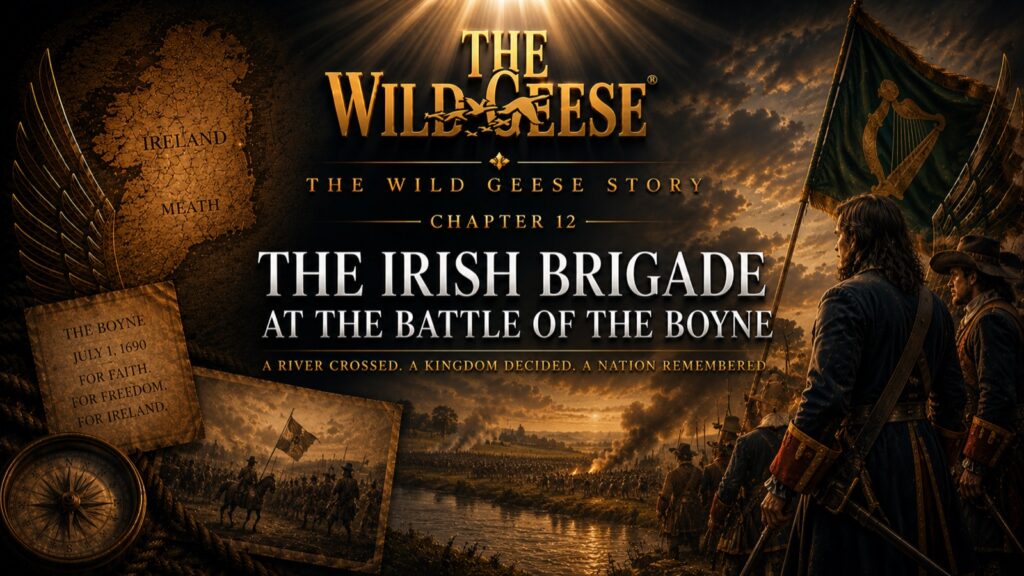
On July 1, 1690, the Jacobite army was beaten at the Boyne — and James II fled the field before it was over. A year later, when Limerick fell, the Irish commanders faced a choice: surrender, or leave. They left.
Chapter 11: Oscar Wilde and the Price of Being Untamed
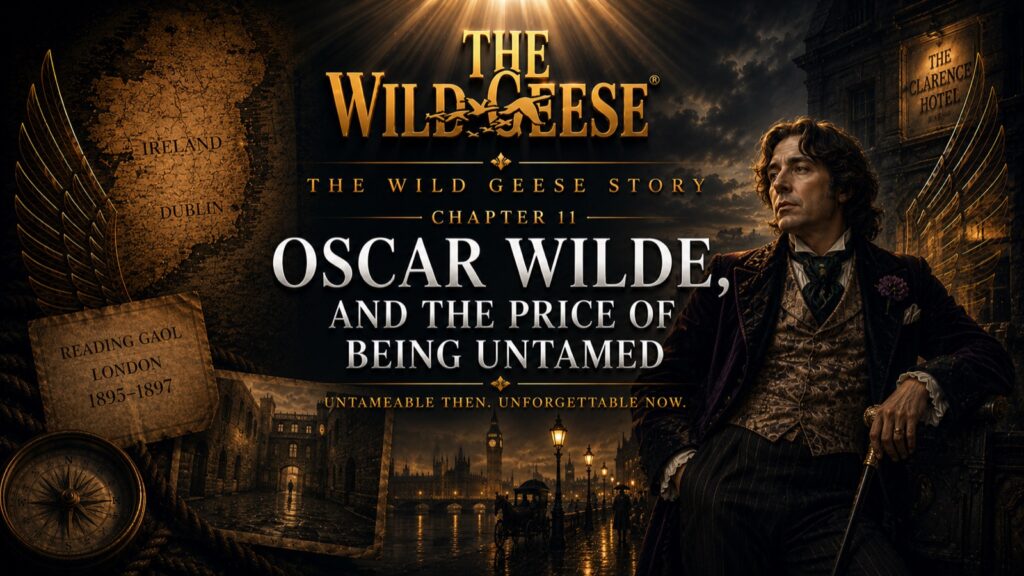
Oscar Wilde walked out of Reading Gaol in 1897, having served two years’ hard labour for the crime of being who he was. Disgraced and exiled then; one of the most quoted writers in the language now. He was, in the end, untameable.
Chapter 10: John Barry and the Birth of the American Navy
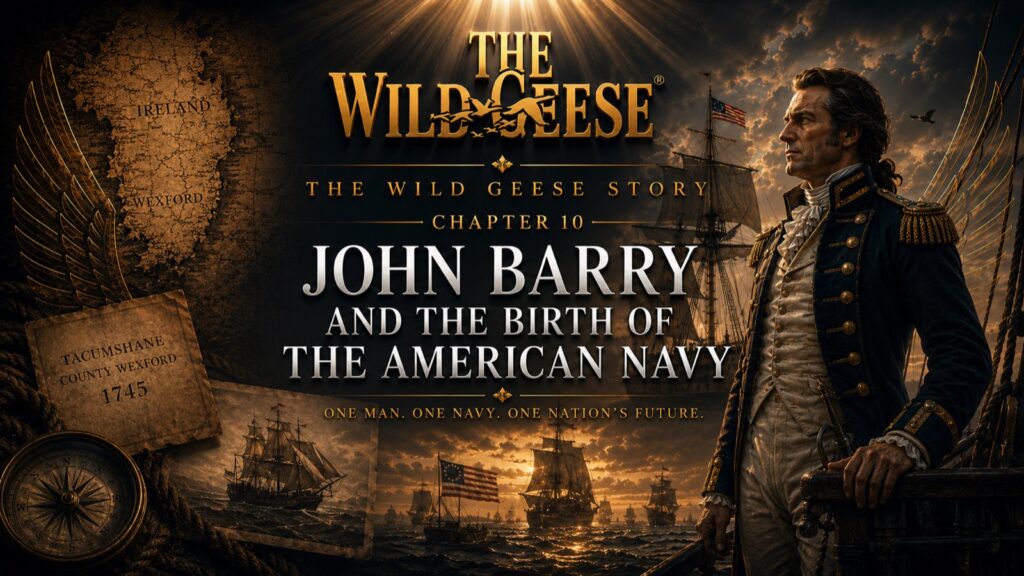
George Washington needed a navy and had nothing to build one with — except a sea captain from County Wexford. John Barry won the first ship-to-ship engagement under the Continental flag and became the first Commodore of the United States Navy.
Chapter 9: Annie Moore, First Through the Gate
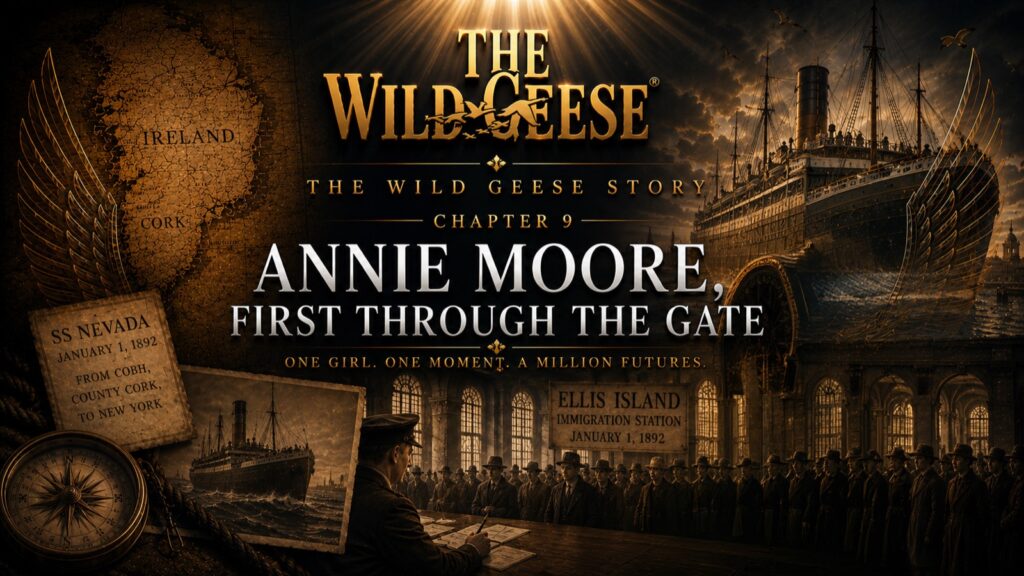
On January 1, 1892, a fifteen-year-old girl from County Cork became the first person ever to pass through Ellis Island. Her name was Annie Moore — and statues of her now stand at Cobh and Ellis Island, facing each other across the Atlantic.
Chapter 8: The Coffin Ships, 1847
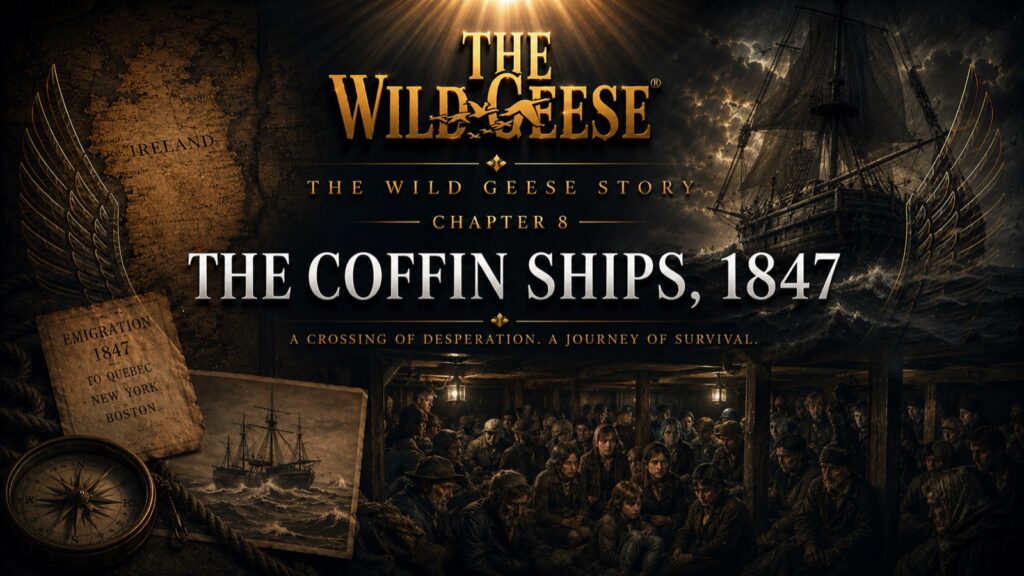
They called them coffin ships because that was what they were. In 1847, the worst year of the Great Famine, a million Irish fled on cargo vessels converted to carry human beings. Their descendants are in every country in the world.
Chapter 7: Bernardo O’Higgins and the Liberation of Chile
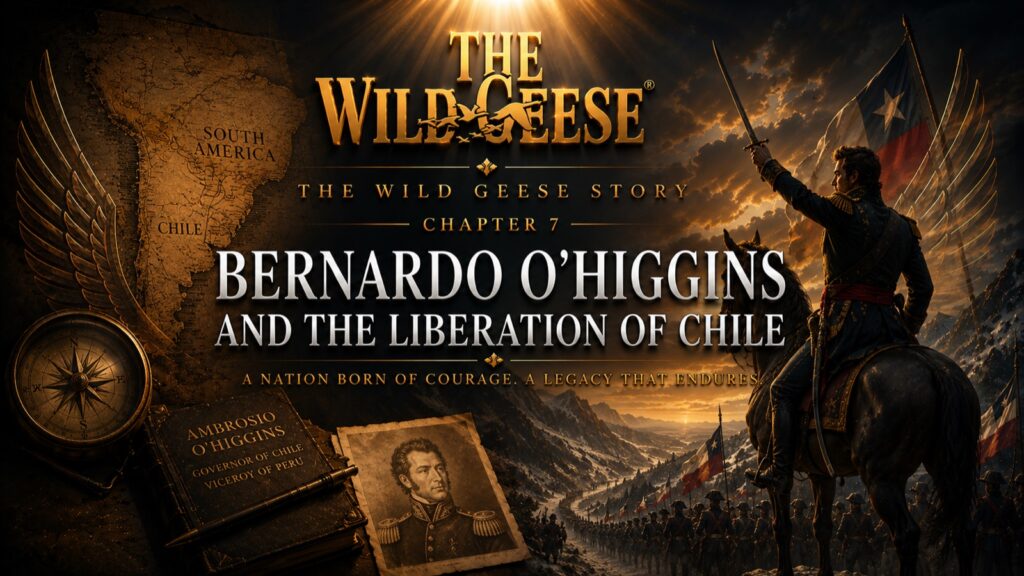
The father of Chilean independence was the son of a man from County Meath. Ambrosio O’Higgins rose from a penniless Irish emigrant to Viceroy of Peru — and his son Bernardo crossed the Andes to free a nation.
Chapter 6: The Wild Geese in South America
In 1814, William Brown — a merchant captain from Foxford, County Mayo — sailed into the Rio de la Plata and built Argentina a navy from almost nothing. His portrait is on the fifty-peso note. He never forgot where he was born.
Chapter 5: Patrick Sarsfield, the Man Who Blew Up His Own Side’s Ammunition
In the late summer of 1690, Patrick Sarsfield rode five hundred horsemen through enemy country to destroy the Williamite siege train at Ballyneety — using his own name as the password. The siege of Limerick was delayed for weeks.
