
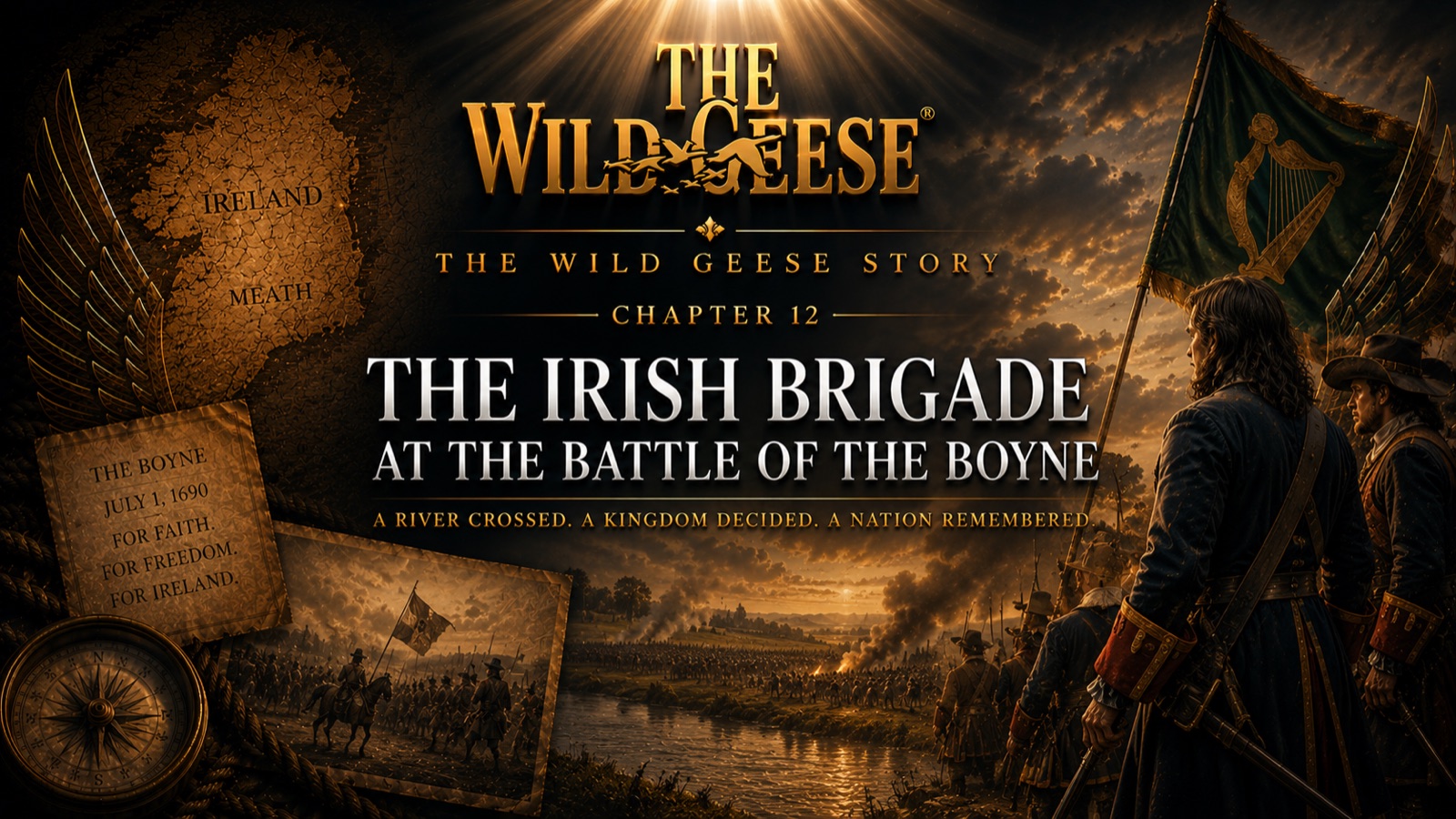
July 1, 1690, on the banks of the River Boyne in County Meath. Two armies faced each other across a river. One fought under King William of Orange. One fought under the deposed King James II. The Irish Catholic forces fighting under James were the most significant military force Ireland had yet assembled in the seventeenth century. They were outnumbered.
The battle lasted most of the day. The Williamite forces crossed the river in three places simultaneously. The Jacobite forces, defending the southern bank, were unable to hold against the coordinated assault. By late afternoon, the battle was lost. James II left the field before it was over — an act of self-preservation that the Irish soldiers who stayed and fought did not forget or forgive.
The Jacobites retreated south and west. The fight for Ireland continued for another year, through the sieges of Athlone and Limerick, through a series of engagements that the Irish troops won with the kind of stubborn effectiveness that comes from knowing there is nothing behind them to retreat to.
When Limerick finally fell and the Treaty was signed, the Irish military commanders faced a straightforward choice. They could accept the terms offered, surrender their arms, and return to a country where their land, their faith, and their political existence would be systematically dismantled. Or they could leave.
They left. Every one of them who could get on a ship went. They were going to fight somewhere, and for another country if necessary; but every battle they fought was with the belief it would bring them closer to their final battle for Ireland, their homeland.
