
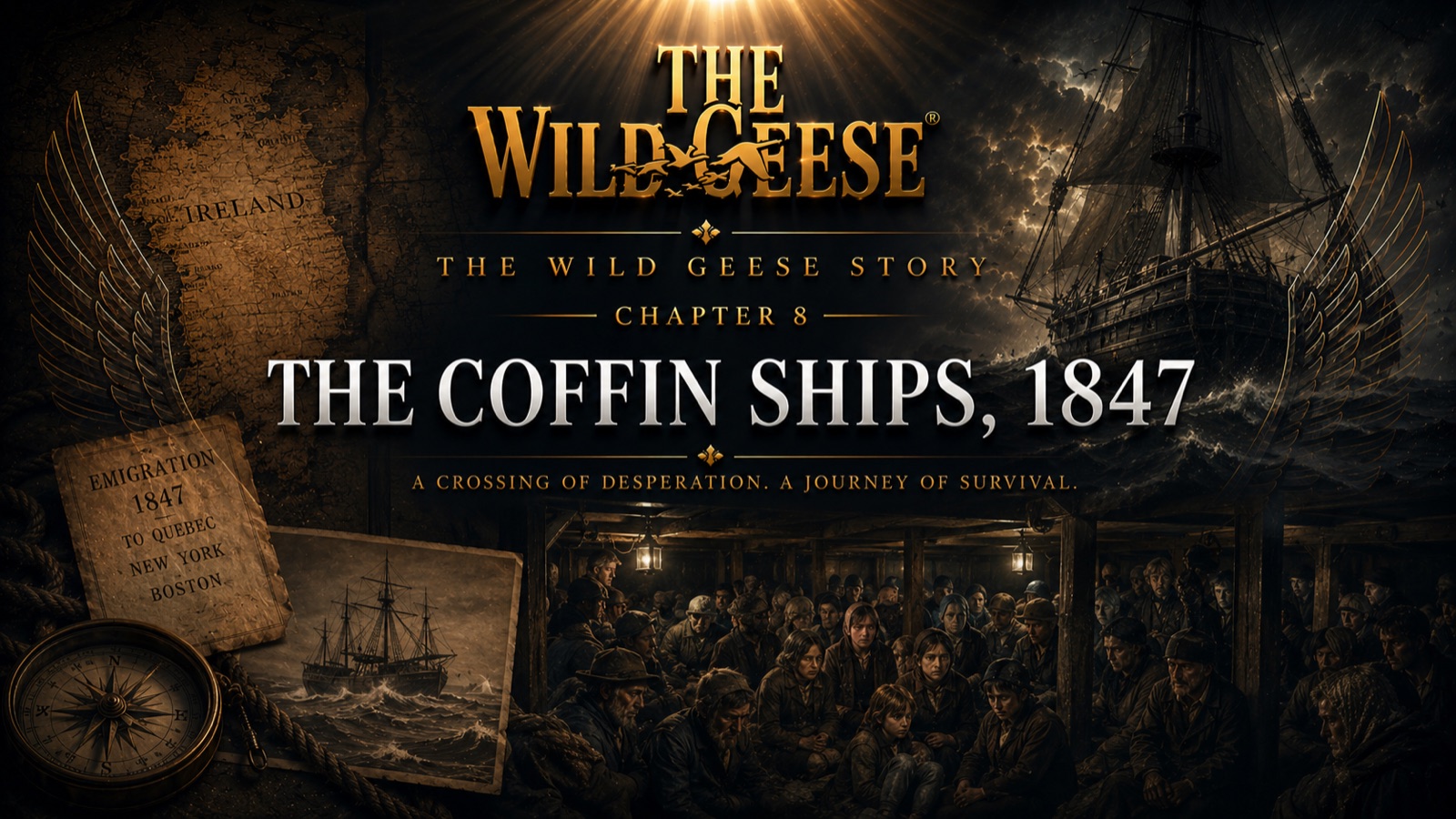
They called them coffin ships not because that was a poetic name but because that was what they were.
The Great Famine began in 1845 when a fungal blight destroyed the potato crop across Ireland. By 1847, the worst year, one million people were dead of starvation and disease. Another million would emigrate in that single year alone. The ships that took them were not designed for passengers. They were timber traders, grain freighters, vessels that normally carried cargo and had been hastily, cheaply converted to hold human beings in their holds.
The crossings took between four and twelve weeks depending on weather. Passengers were issued minimum rations — sometimes nothing at all when the ship’s owners cut costs. Disease spread through the holds with terrible efficiency. Typhus, dysentery, cholera. Bodies were buried at sea without ceremony, sometimes before the ship had left sight of the Irish coast.
Those who survived arrived in Quebec, in New York, in Boston in a state that alarmed the receiving ports. Quarantine stations filled beyond capacity. Whole shiploads of the sick were held on Grosse Ile in the St. Lawrence River, in conditions that killed thousands more after the crossing was over.
It is estimated that between 1845 and 1852, Ireland lost approximately twenty-five per cent of its population to death and emigration. The Ireland those survivors arrived in was not the country they had left. It was something older and harder, a country that had been through a trauma it would spend the next century and a half trying to name.
The descendants of those crossings are in every country in the world. They did not forget where they came from. They were not allowed to.
