
Chapter 34: What It Means to Be Untamed
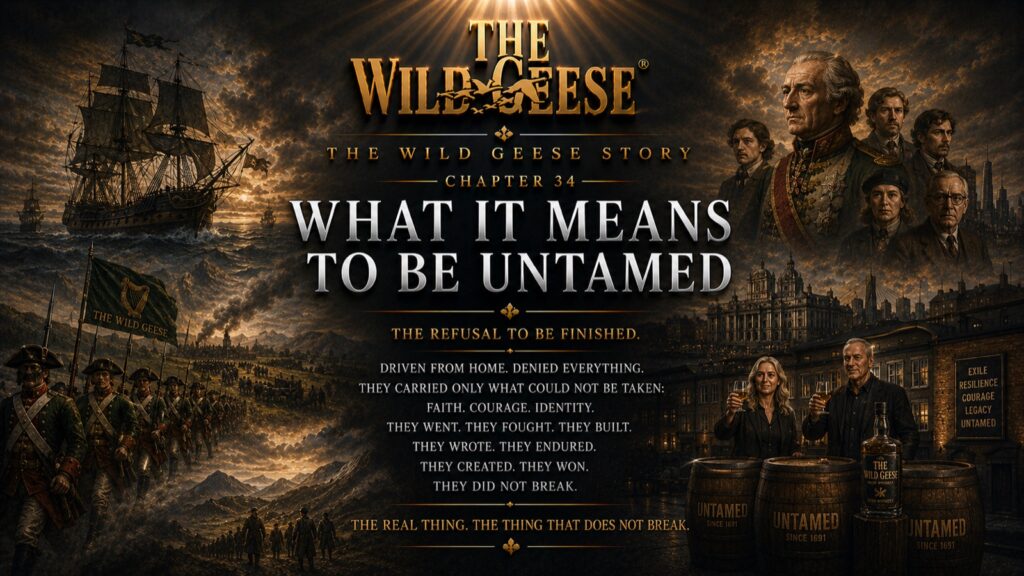
Across convicts, Famine survivors, soldiers, writers, and two people who took on a drinks giant and did not lose — one quality recurs. Not optimism. The understanding that what happens to you is not the same as what you are. The thing that does not break.
Chapter 33: The Wild Geese in Austria — The Count of Lacy
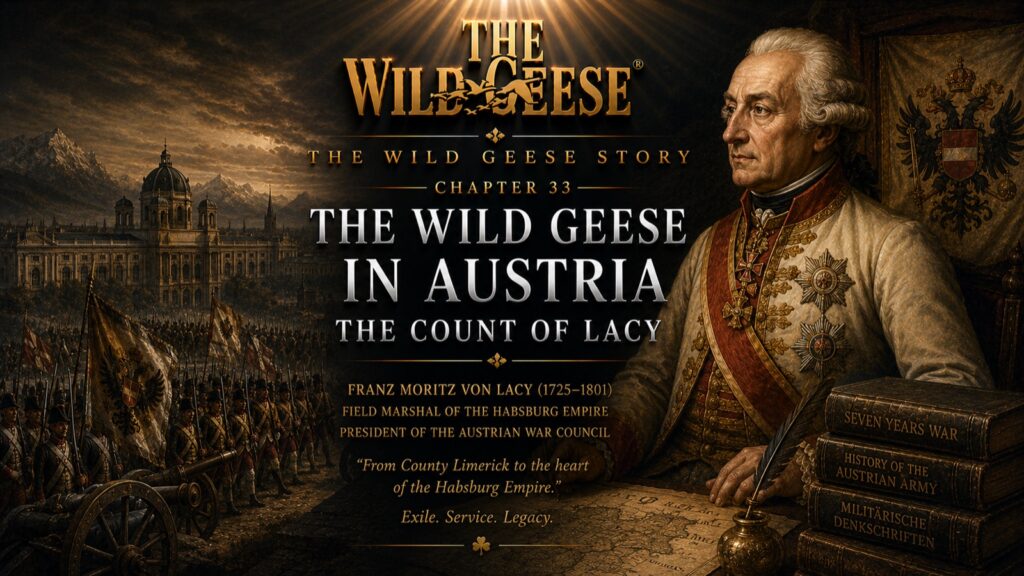
Franz von Lacy, son of a County Limerick refugee, rose to run the military establishment of the Habsburg Empire. The Wild Geese reached Austria too — Browne, Nugent, Butler, Dillon — Irish surnames commanding armies in languages their grandfathers never knew.
Chapter 32: Roads That Lead Somewhere
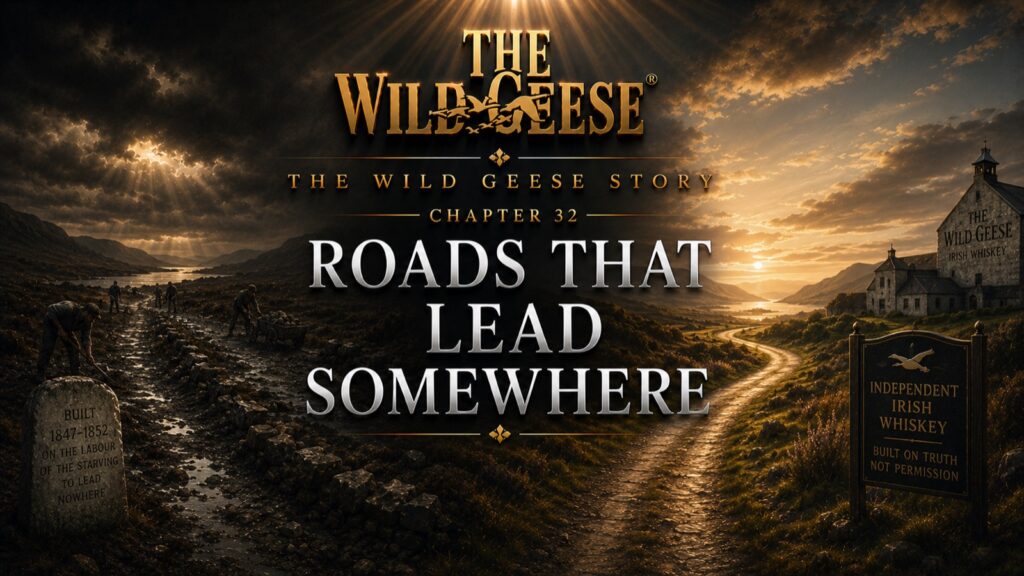
The Famine roads were access on someone else’s terms: work for nothing, build nothing. Andre and Mairade heard a modern version of that offer — compete only where permitted — and declined. The Famine roads go nowhere. The Wild Geese goes somewhere.
Chapter 31: The Famine Roads
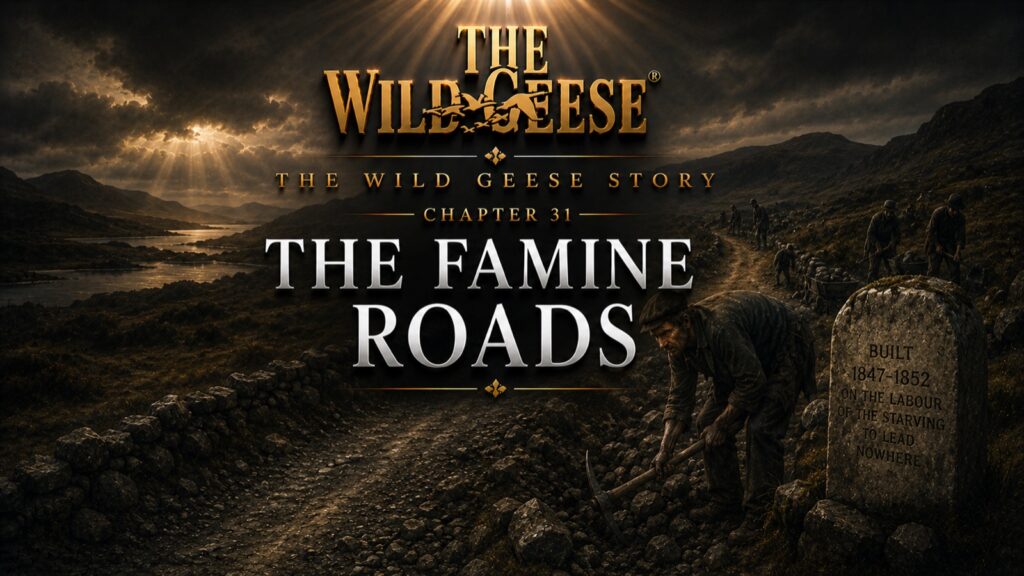
During the Famine, the British relief policy put starving men to work building roads that led nowhere — labour-intensive by design, paid below subsistence. Many died where they worked. In the west of Ireland, those roads are still there. Someone died building each one.
Chapter 30: John Ford — The Man Who Made the West
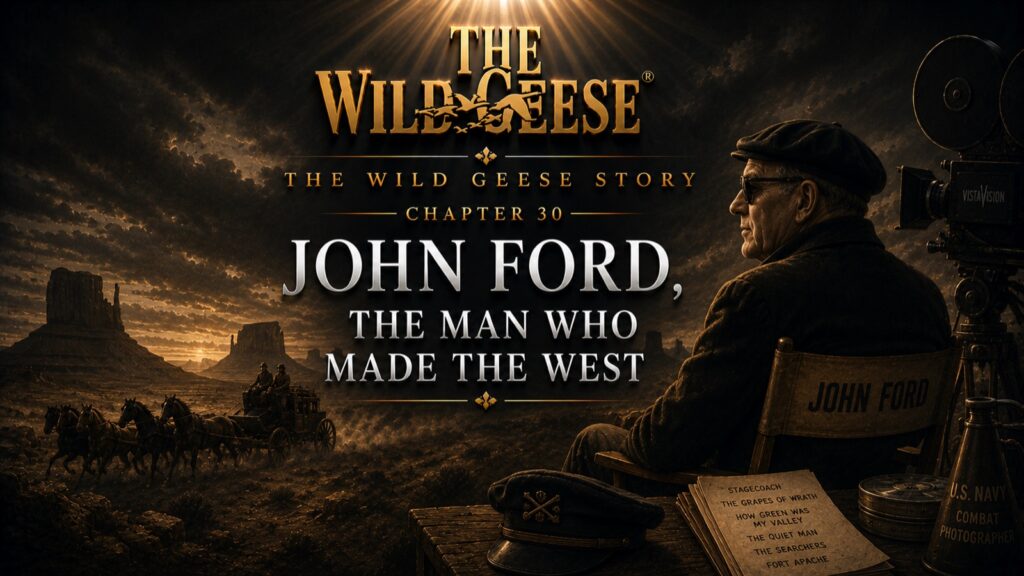
Born Sean Aloysius O’Fearna, John Ford won four directing Oscars and invented the visual language of the Western. Asked why he never made a film about Ireland, he said everything he ever made was about Ireland.
Chapter 29: The Wild Geese in France — The Regiments That Refused to Stop
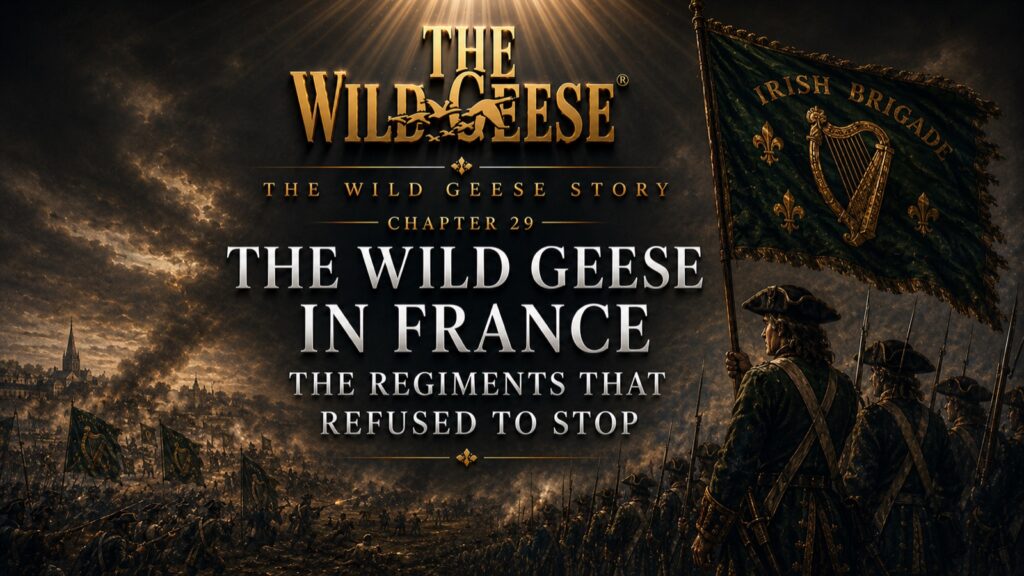
For a century the six Irish Regiments of France fought at Blenheim, Ramillies, Fontenoy and beyond as Irish units — exiles with nowhere to go who became one of the most decorated formations in the French army. Exile does not always destroy what is sent into it.
Chapter 28: George Bernard Shaw and the Irishman Who Argued with Everyone
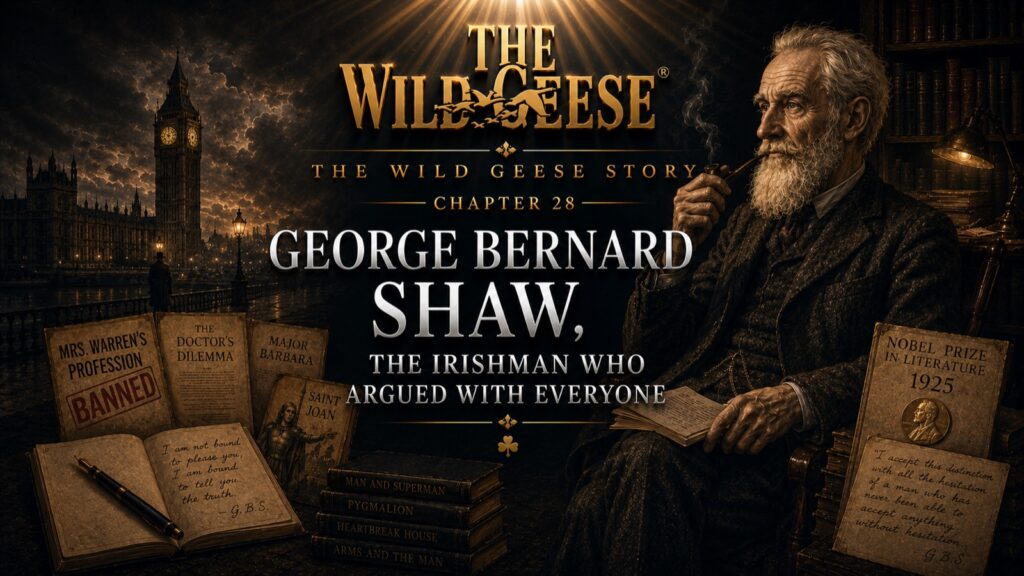
George Bernard Shaw spent his life making England uncomfortable with the precision of his observations — the most successful playwright in the language, and constitutionally incapable of agreeing with anyone about anything.
Chapter 27: Constance Markievicz — The Rebel Countess
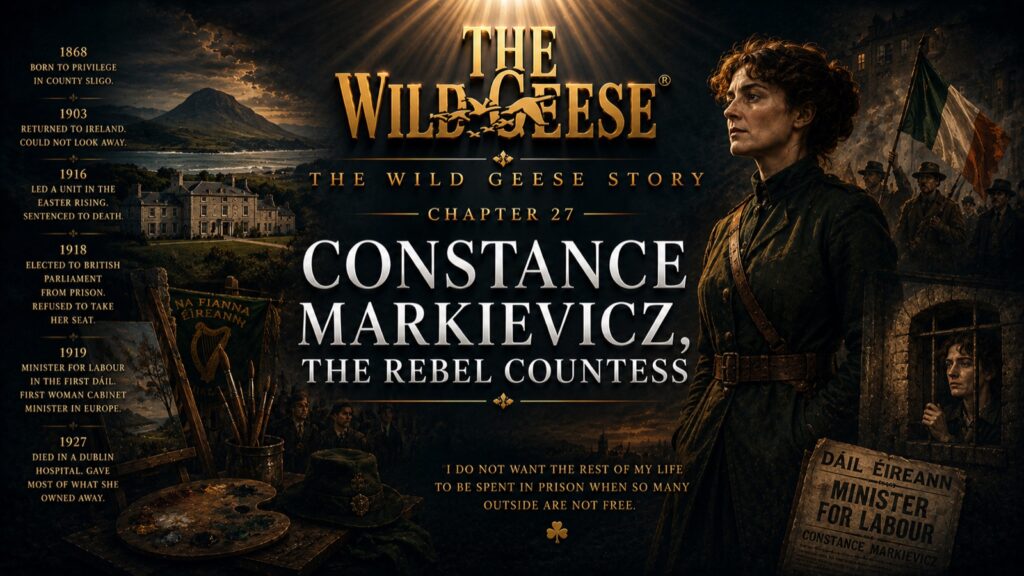
Constance Markievicz went from a Sligo Big House and the court of Queen Victoria to commanding troops in the Easter Rising. First woman in a European cabinet, she died in a public ward having given everything away.
Chapter 26: The Green Flag at the Alamo
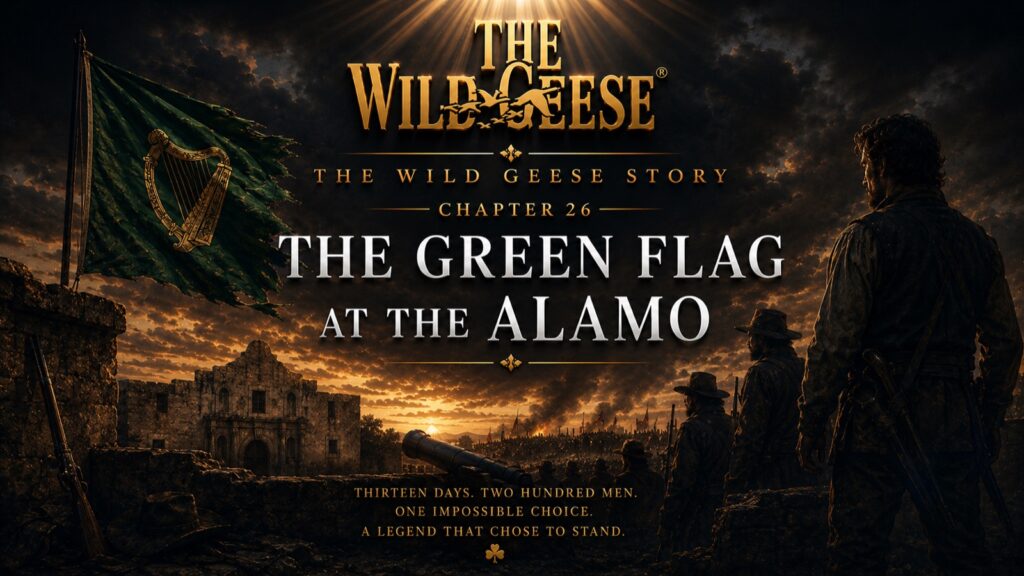
The first flag flown in answer over the Alamo was green. Among the doomed defenders were men whose blood ran back to Ireland — holding an impossible position because they believed the cause was right. The Wild Geese would have understood it without explanation.
Chapter 25: The Town of San Patricio
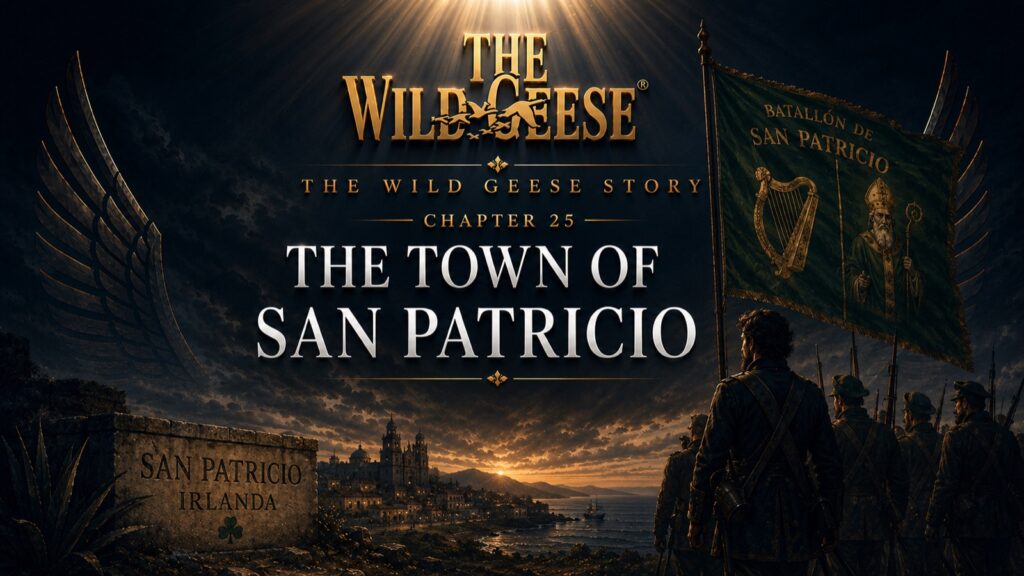
During the Mexican-American War, several hundred Irish Catholic soldiers deserted the US Army to fight for Catholic Mexico under their own green banner. The San Patricios: heroes in Mexico, a difficult memory in the US, barely known in Ireland.
