
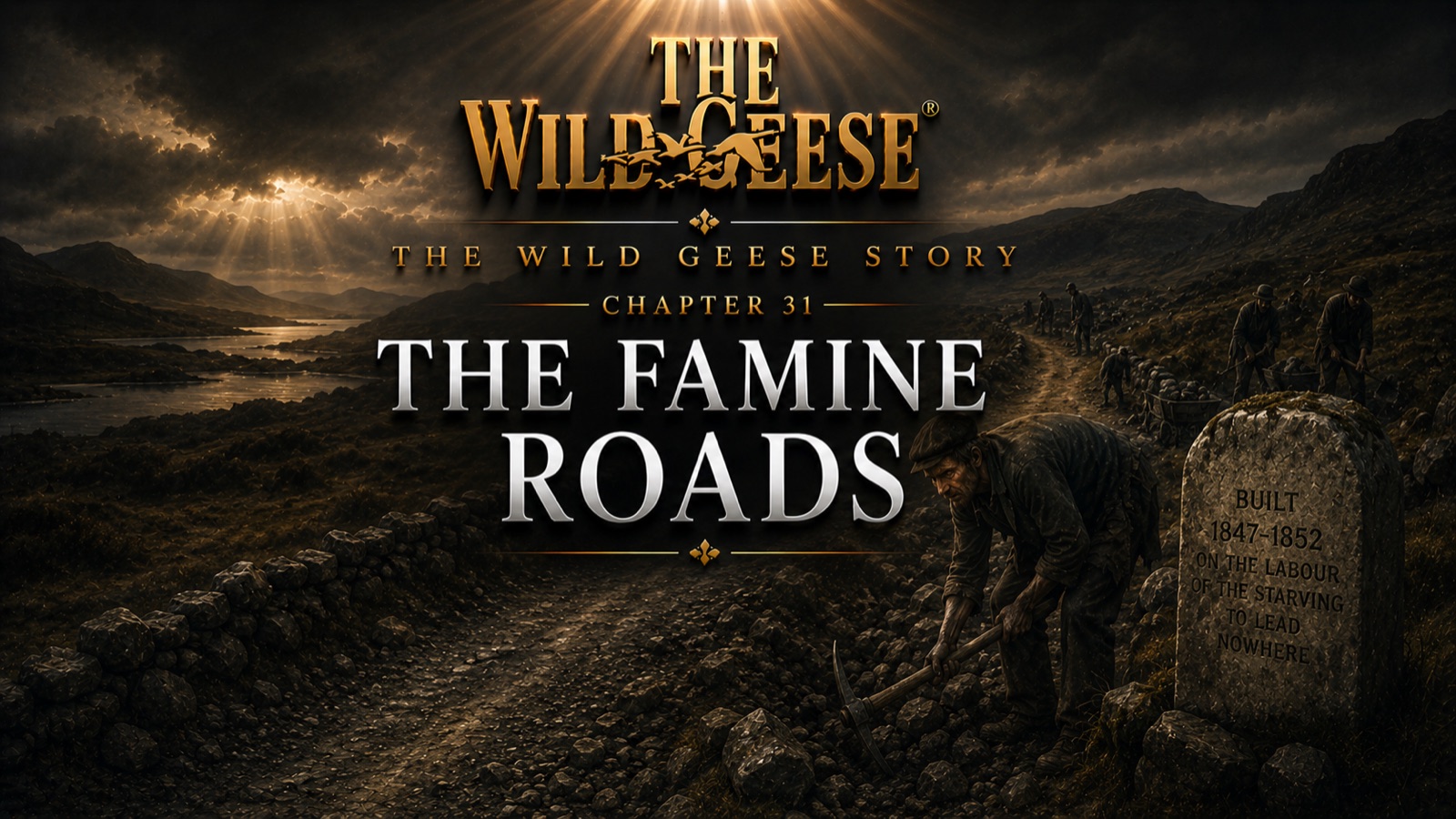
There is a particular cruelty in the landscape of western Ireland that you can read if you know how to look. The roads that connect nothing to nowhere, that start in bog and end at the edge of a lake, that curve through mountain passes for reasons that make no geographic sense — these are the Famine roads.
During the worst years of the Great Famine, the British government’s principal response to mass starvation was the public works scheme. The reasoning was ideological: relief should not be given directly, as charity, because charity would undermine the moral character of the recipients. If people wanted food, they should work for it. So they were put to work.
Building roads.
The roads were not planned for utility. They were planned to be labour-intensive. The point was employment, not infrastructure. Men who were already weakened by months of inadequate food were given picks and shovels and set to work in the Irish winter, often without adequate clothing, breaking stone for roads that led nowhere and served no commercial purpose. They were paid a wage that was set below the market rate for agricultural labour, on the explicit theory that a higher wage would draw workers away from farming.
Many of them died on the roads. Dropped where they were working, from cold or exhaustion or a body that had simply run out of resources. The foremen noted the deaths in their ledgers. The roads were built.
You can walk on them today. They are overgrown in places, washed out in others. But they are there. In the west of Ireland, if you drive on a road that seems to serve no purpose, you are probably driving on one.
Someone died building it.
