
Chapter 44: One Name, Two Hundred Years
Trace one family from Limerick in 1691 across two hundred years and five continents — France, Austria, Argentina, America, Australia — and the name remains. History spent three hundred years trying to make the Irish disappear. They are still here.
Chapter 43: The Medal Count
Ireland in 1691 — two million people, poor, with no place for a Catholic to rise — produced more than a dozen foreign Field Marshals through its exiles. The suppression had only ever suppressed the opportunity. The talent was always there.
Chapter 42: The Younger Generation — What the Diaspora Became
Seventy million people claim Irish descent — Carlos O’Brien, Jean-Michel Murphy, names worn by a dozen languages. Ireland changed the diaspora; the diaspora helped change Ireland. The Wild Geese exists at that intersection. The thing that endures.
Chapter 41: The Road From Cobh
Two and a half million people sailed from Cobh, last seeing Ireland at the Old Head of Kinsale. Most never returned. When you leave something under those circumstances, you carry it with you — because it is the only thing that cannot be taken.
Chapter 40: The Wild Geese Come Home — Irish Whiskey in the Twenty-First Century
When The Wild Geese launched in 2001, Irish whiskey was barely recovering. With 75+ international awards and global reach, it was the one brand that could have challenged Jameson’s dominance — and was stopped, first by Pernod Ricard, then by Beam. Two sieges ended. A third begins.
Chapter 39: Mairade’s Story — The Other Half of the Dream
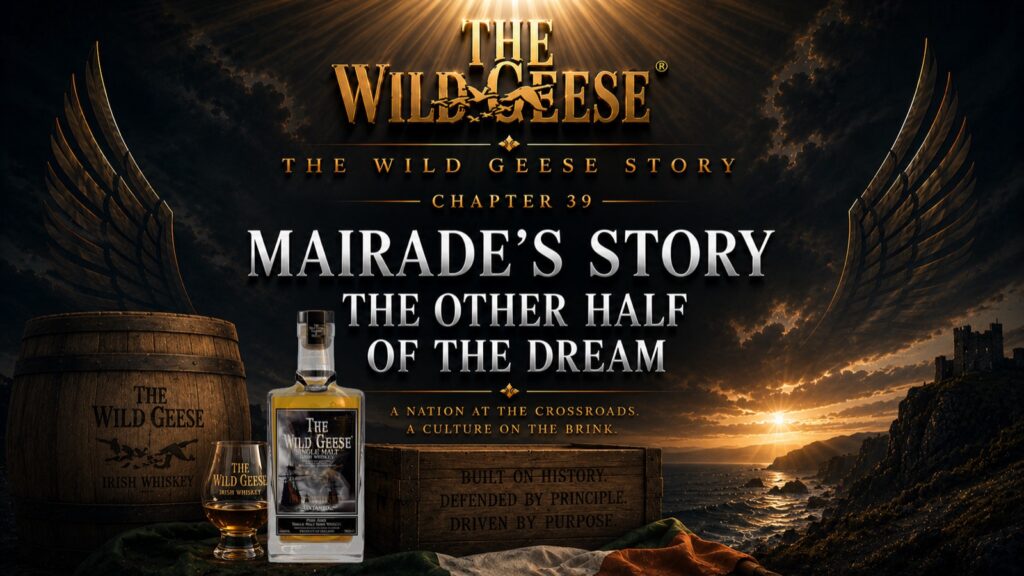
History names the man and forgets the woman. Mairade Kelly was part of every decision to keep fighting Pernod Ricard. The Wild Geese honours individuals who refused a fate — and Mairade and Andre built a brand around those stories, then lived them.
Chapter 38: The Fighting 69th
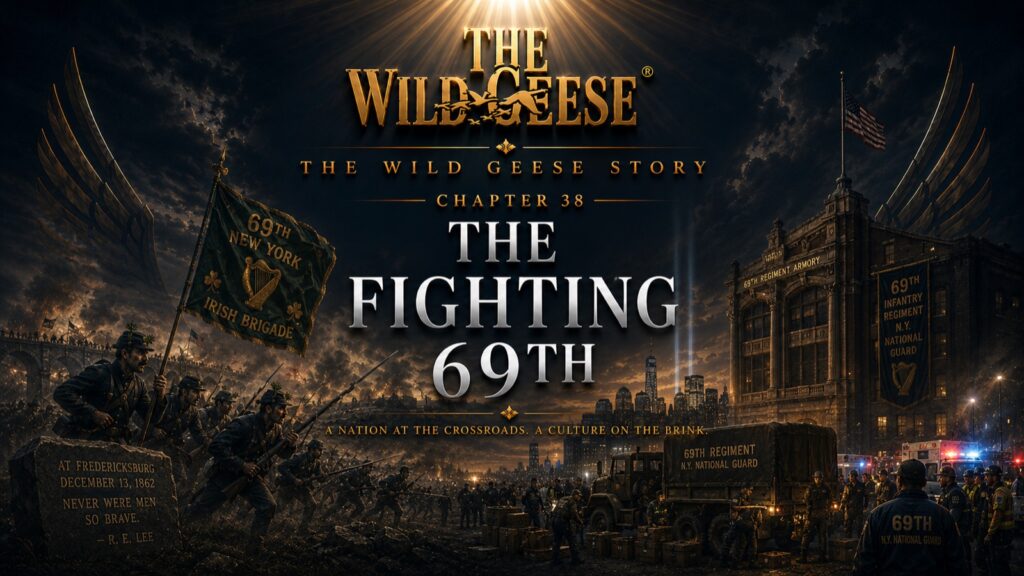
The Fighting 69th — oldest Irish-American unit in the US, ‘Fighting Irish’ before Notre Dame. At Fredericksburg they charged a position they knew was fatal. Lee, watching, is said to have remarked: never were men so brave.
Chapter 37: The Unmarked Graves of Grosse Ile
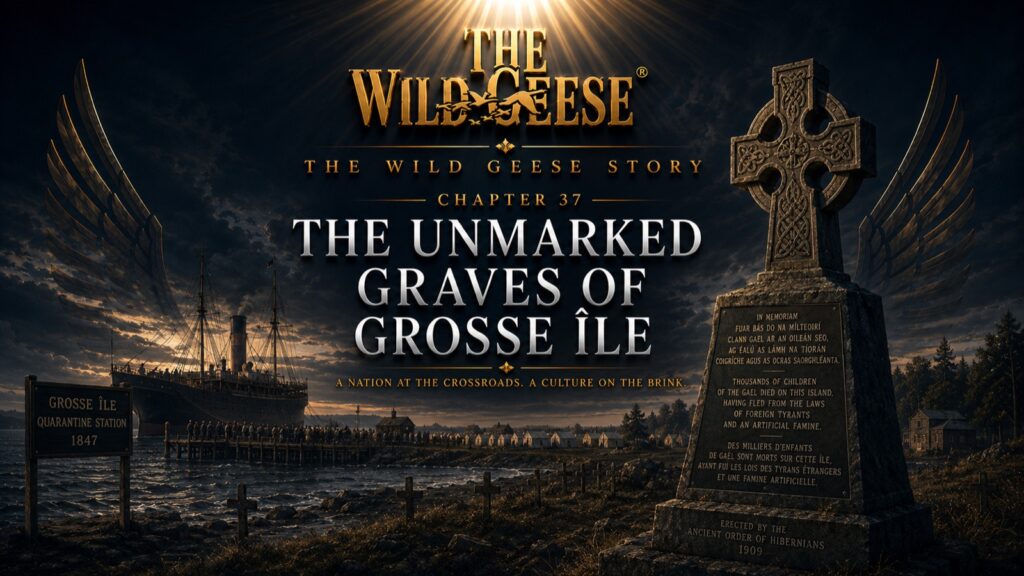
In 1847, Grosse Ile in the St. Lawrence became where the Famine arrived in Canada. More than five thousand died in mass graves on the island. Its Celtic cross records children of the Gael who fled foreign tyrants and an artificial famine.
Chapter 36: The Wild Geese in Russia
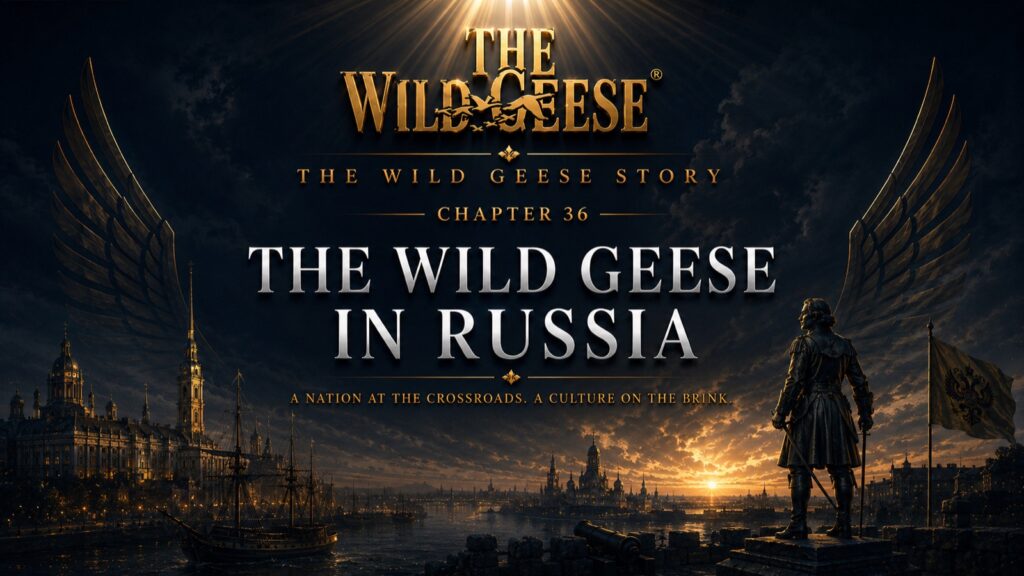
Peter Lacy left County Limerick with the Wild Geese in 1691 and rose to Field Marshal of the Russian army under Peter the Great. His son reached the same rank in Austria. Two generations, three empires, starting from landless exile.
Chapter 35: Andrew Rowan and the Lost Irish-Americans
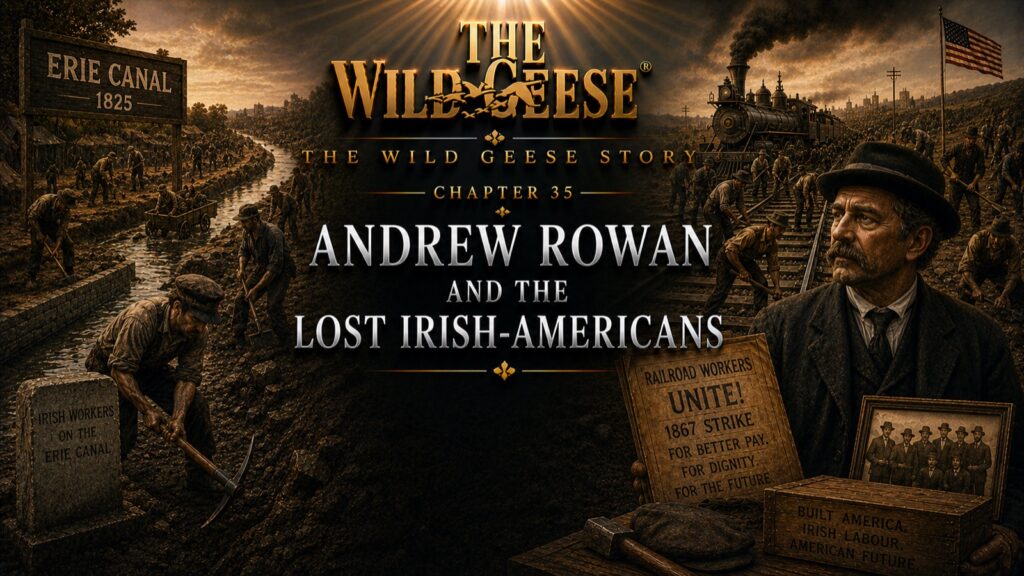
The Erie Canal and the transcontinental railroad were dug by Irish hands at the lowest wages, in camps with the mortality of military campaigns. They got no monuments. They got cities. The cities they built stand.
