
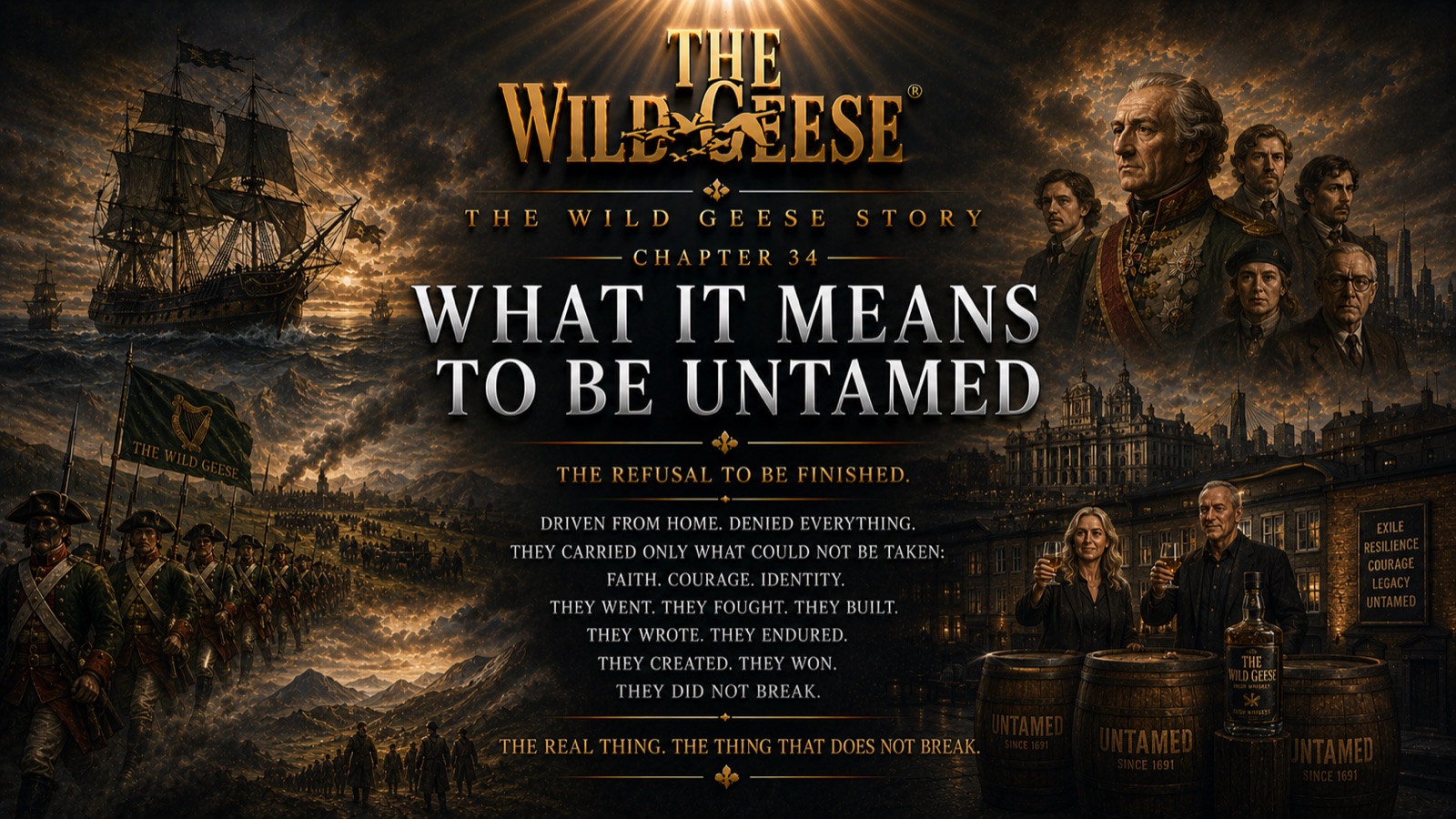
The word comes up again and again in the history of the Irish diaspora. Not the word itself — the quality it describes. The refusal to be finished.
You can trace it in the lives. The convicts who arrived in Australia in chains and built trades unions. The Famine survivors who crossed in coffin ships and built cities. The soldiers who left with nothing and won battles on five continents. The writers who were imprisoned or exiled or ignored and kept writing. The two people who built a whiskey brand and took on one of the most powerful drinks companies in the world and did not lose once.
What is this? It is not optimism. The Irish have a complicated relationship with optimism. It is not the naive belief that things will work out. Too much history has provided evidence to the contrary. It is something more specific than that: the understanding that what happens to you is not the same as what you are. That external force — political, military, economic, historical — can destroy everything around you without being permitted to define you.
The Wild Geese soldiers in 1691 had lost everything that the world measures. Land, country, political power, legal standing, the right to practise their religion openly. They had nothing except each other and the identities they carried inside themselves. They got on ships and they went and they made history with what they had left.
That is the quality The Wild Geese exists to honour. Not Irish sentimentality. Not green beer. Not the comfortable tourist version of a complicated history.
The real thing. The thing that does not break.
