
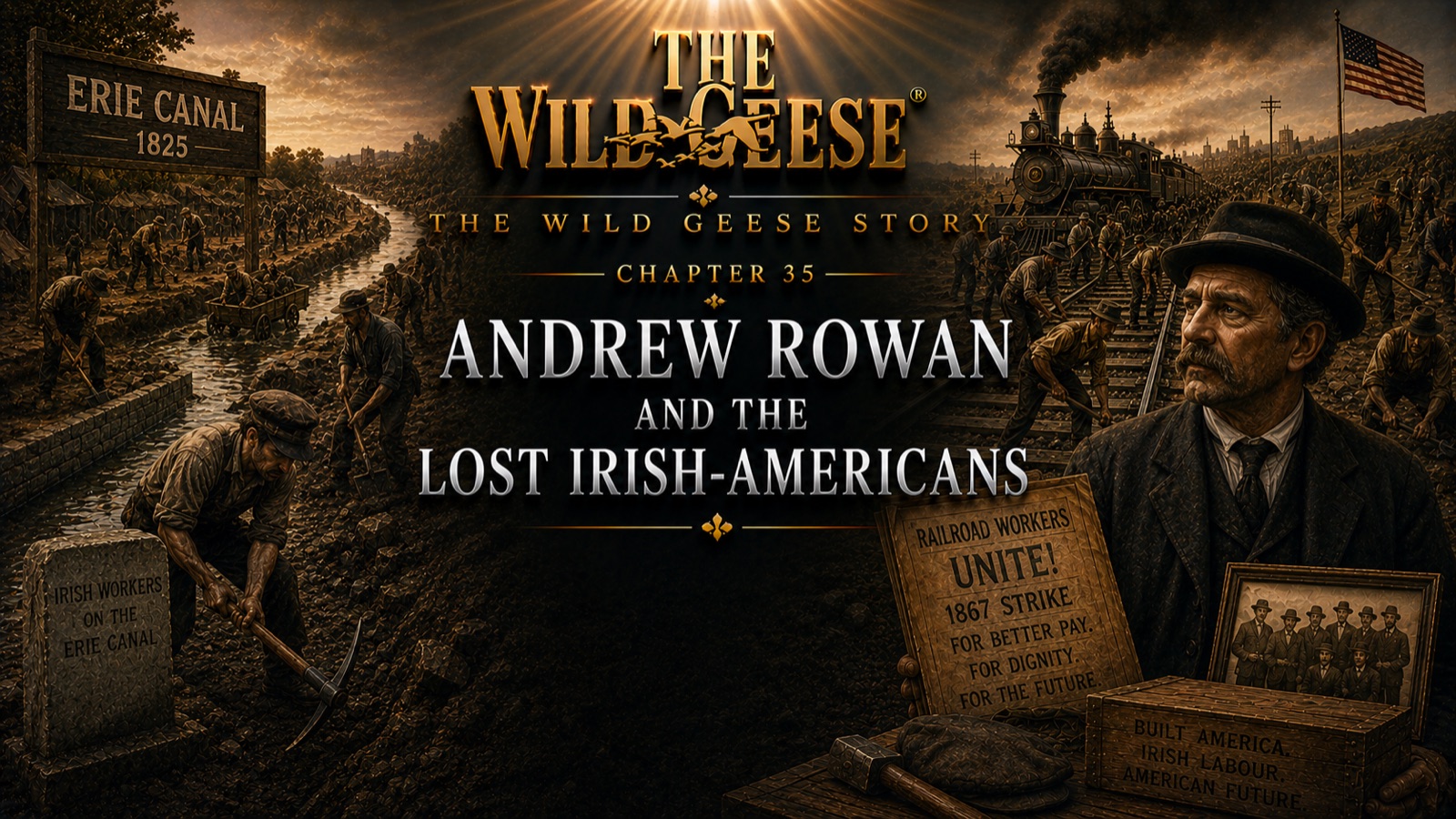
There is a category of Irish-American history that falls between the formal diaspora story — the generals, the presidents, the poets — and the lives of the ordinary millions who came and worked and were never recorded anywhere except the manifests of ships and the registers of parish churches.
These are the ones who built things.
The Erie Canal, opened in 1825, was dug substantially by Irish immigrant labour — men who had arrived after various crop failures in the years before the Famine, who were paid the lowest wages the contractors could negotiate, who lived in camps along the route that had the disease mortality rates of military campaigns. Three thousand of them are estimated to have died during construction, from disease, accident, and the sheer physical attrition of digging three hundred and sixty-three miles of canal through rock and clay with pickaxes.
The railroads were similar. The transcontinental railroad that connected the American coasts in 1869 used Irish labour for the Central Pacific’s eastern portion — Irish workers laying track from the east while Chinese workers laid track from the west, meeting in Utah. The Irish workers organised the first railroad strikes, in 1867, demanding better pay and better conditions, and were met with the response that met most such demands: first resistance, then accommodation, then the slow erosion of the gains over subsequent years.
They did not get monuments. They got cities. The cities they built stand.
