
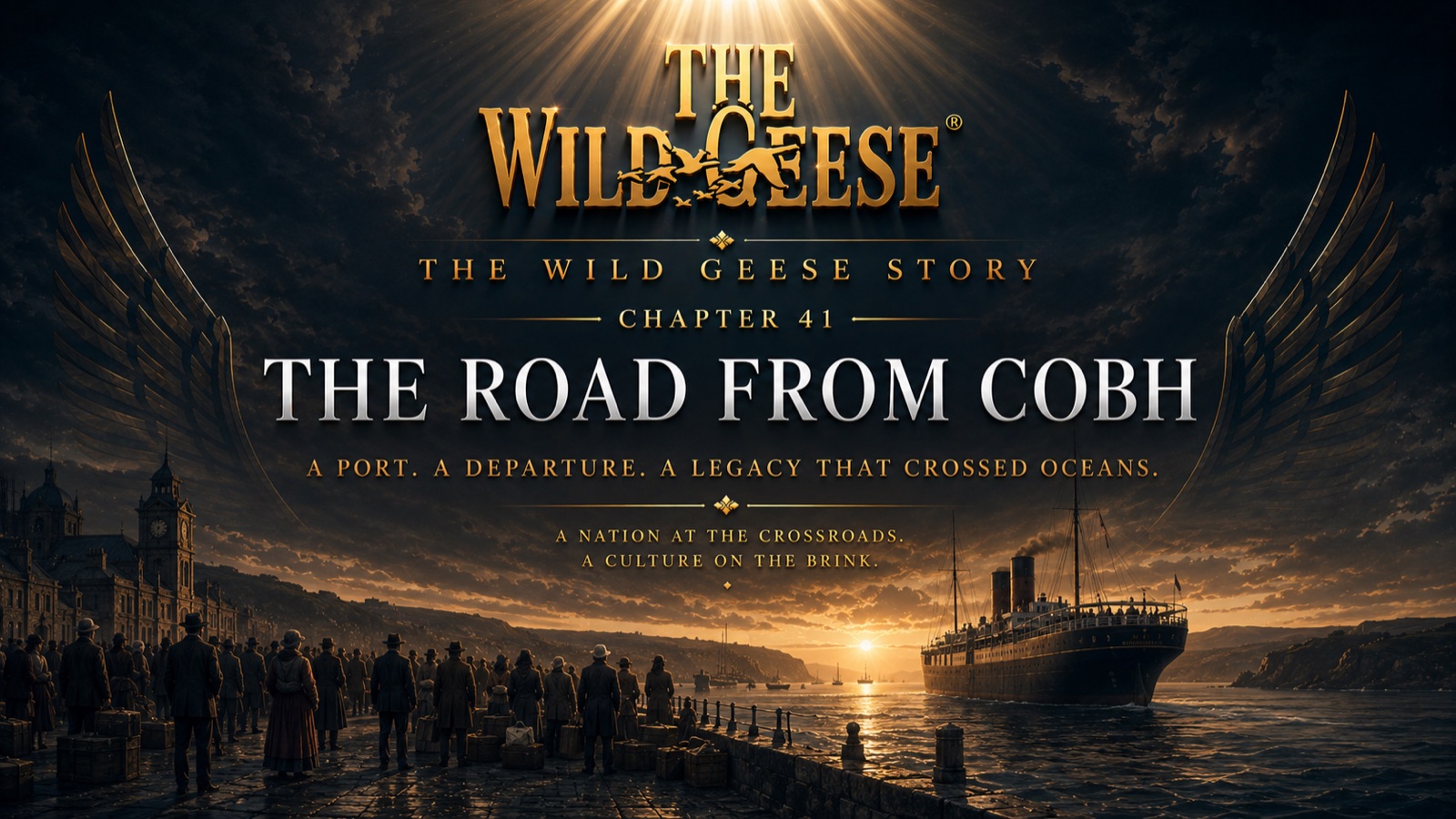
The port of Cobh in County Cork was called Queenstown from 1849 to 1920. In the years between those dates, an estimated two and a half million people departed from its harbour for North America, Australia, and the broader world.
The last significant land that most of them ever saw as Irish residents was the Old Head of Kinsale, the southernmost promontory of the Cork coast. Ships heading west passed it and then there was nothing but Atlantic until Newfoundland.
The people who stood on deck watching that headland disappear were not a uniform group. They were young men going to find work. They were whole families fleeing eviction. They were political prisoners being transported. They were nuns and priests heading for the missions. They were Famine survivors so weak that some of them died before the headland was out of sight. They were ambitious young women who had decided that Ireland in the nineteenth century offered them nothing commensurate with their capabilities.
What they shared was the act of watching the land go and not knowing — in most cases — if they would see it again. Most of them would not.
The record of what happened after the ships left is the record of the Irish diaspora. It is an improbable story. A people expelled from or driven from or choosing to leave a small island on the edge of Europe, scattered across every continent, maintaining their identity with a tenacity that historians have found difficult to fully explain.
The explanation, if there is one, may be simpler than the scholarship suggests. When you leave something under those circumstances, you carry it with you. You carry it because it is the only thing you have that cannot be taken.
