
On the morning of February 23, 1836, General Santa Anna’s army arrived at San Antonio de Bexar and raised a red flag over the church of San Fernando. The red flag had one meaning: no quarter. No prisoners. No terms.
Inside the old mission compound known as the Alamo, a garrison of fewer than two hundred men prepared to answer it.
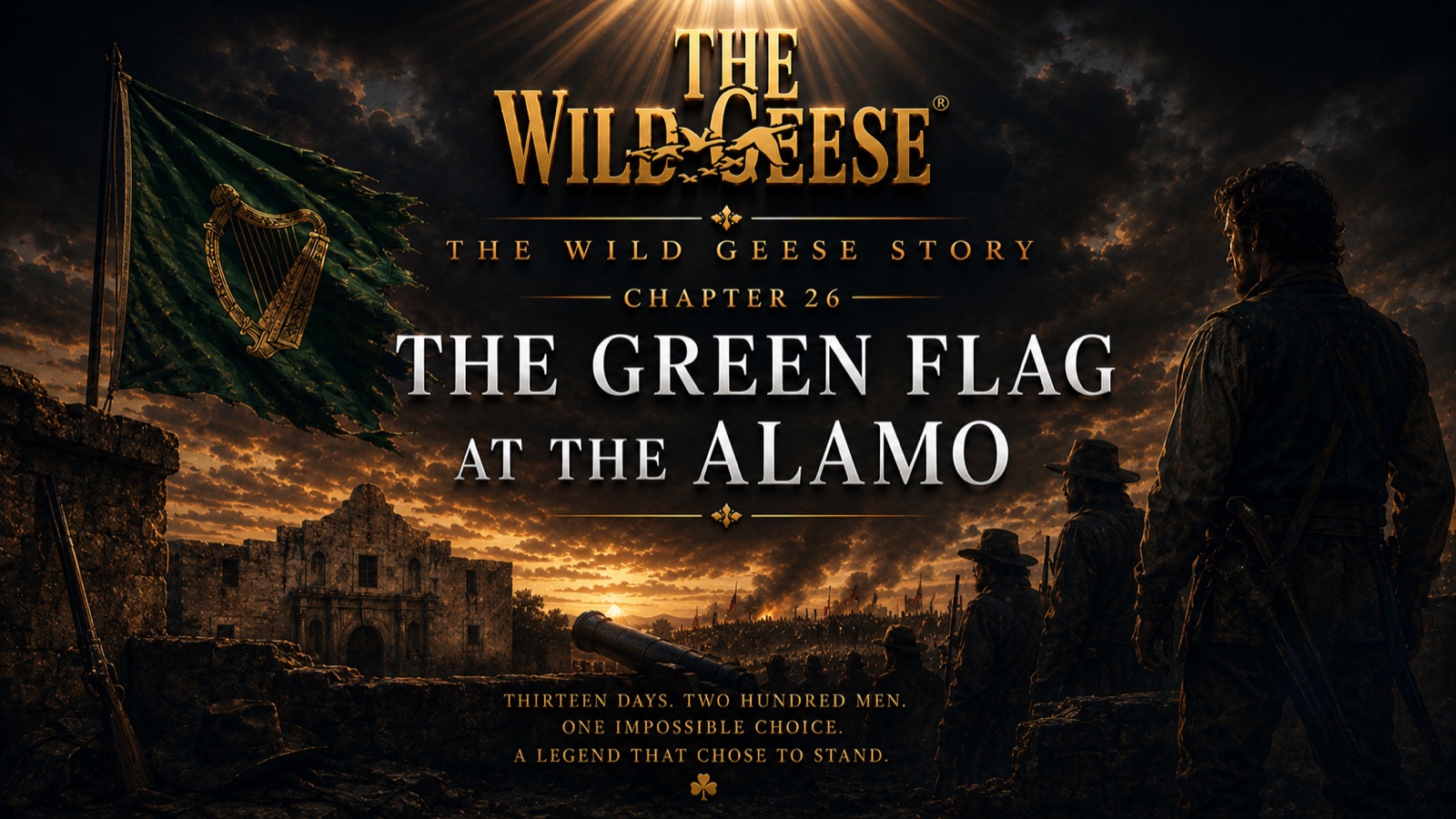
The first flag seen flying in response over the Alamo was green.
Among the men who chose to hold that compound — against an army that would grow to several thousand, in a position every military eye could see was indefensible — were men whose names and blood ran back to Ireland. Jim Bowie, already dying from illness when the siege began, directed the defence from a cot. The defenders included others whose Irish ancestry had come across with the tide of emigration that had been filling the American frontier for generations. They had not come to Texas to die in a Spanish mission. They had come because the frontier was where men with nothing behind them went to build something.
The siege lasted thirteen days. Santa Anna’s forces breached the walls on March 6. Every defender was killed.
What they chose to do in those thirteen days — hold an impossible position against an overwhelming force because they believed the cause was right — is the kind of decision that does not require military logic. It requires something older than that. The willingness to stand when standing costs everything is not a strategy. It is a character.
The Wild Geese would have understood it without explanation. They had made the same calculation, in different centuries, on different soil.
The green flag flew over the Alamo. That is not a footnote. That is the story.
