
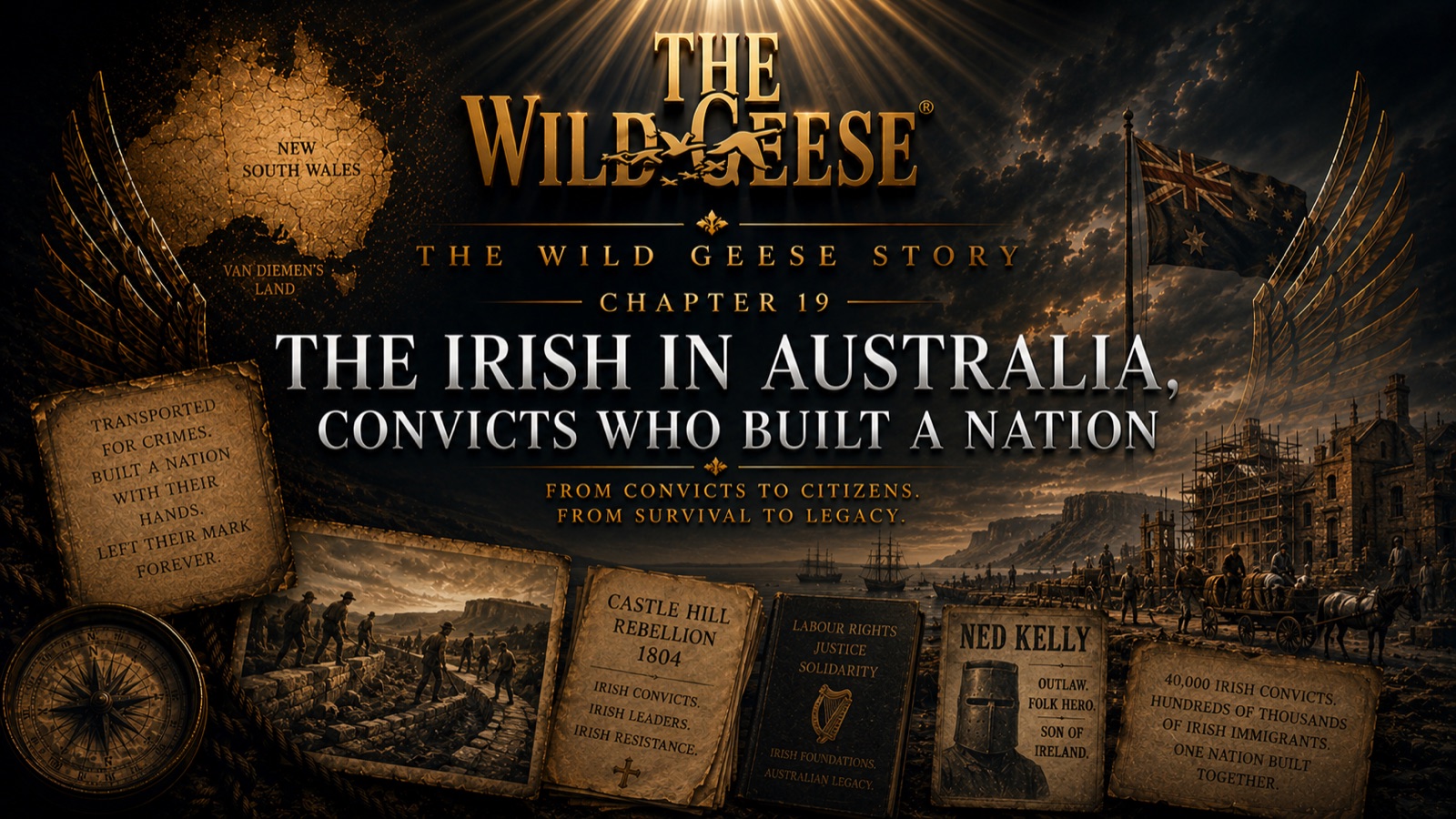
The First Fleet that arrived at Botany Bay in January 1788 carried 736 convicts from British prisons. Among them were Irish men and women, transported for crimes ranging from the trivial to the political, beginning a chapter of Irish-Australian history that lasted until transportation ended in 1868 and that shaped the character of a nation.
Over eighty years, approximately forty thousand Irish convicts were transported to Australia. They were joined by hundreds of thousands of free Irish immigrants, particularly after the Famine of the 1840s, until by the end of the nineteenth century the Irish and Irish-descended population was the largest non-Anglo demographic in the country.
What they built is the part the history books used to overlook.
The labour that constructed the roads, the bridges, the public buildings of early New South Wales was overwhelmingly Irish. The agricultural knowledge that made the inland workable came from people who knew how to make poor soil yield. The institutions of the labor movement that shaped Australian working conditions for a century had Irish names on their founding documents.
The 1798 rebellion in Ireland had sent political prisoners to Australia — men who arrived with ideas about resistance and rights that did not dissolve in the Sydney heat. The Castle Hill Rebellion of 1804 was led by Irish convicts. It failed, and its leaders were executed, but the tradition they represented did not disappear. It went underground and it survived.
Ned Kelly’s mother was Irish. So was his father. He has been called an outlaw, a folk hero, and a symbol of resistance to English authority. He is, at minimum, the most Irish thing that Australia ever produced.
