
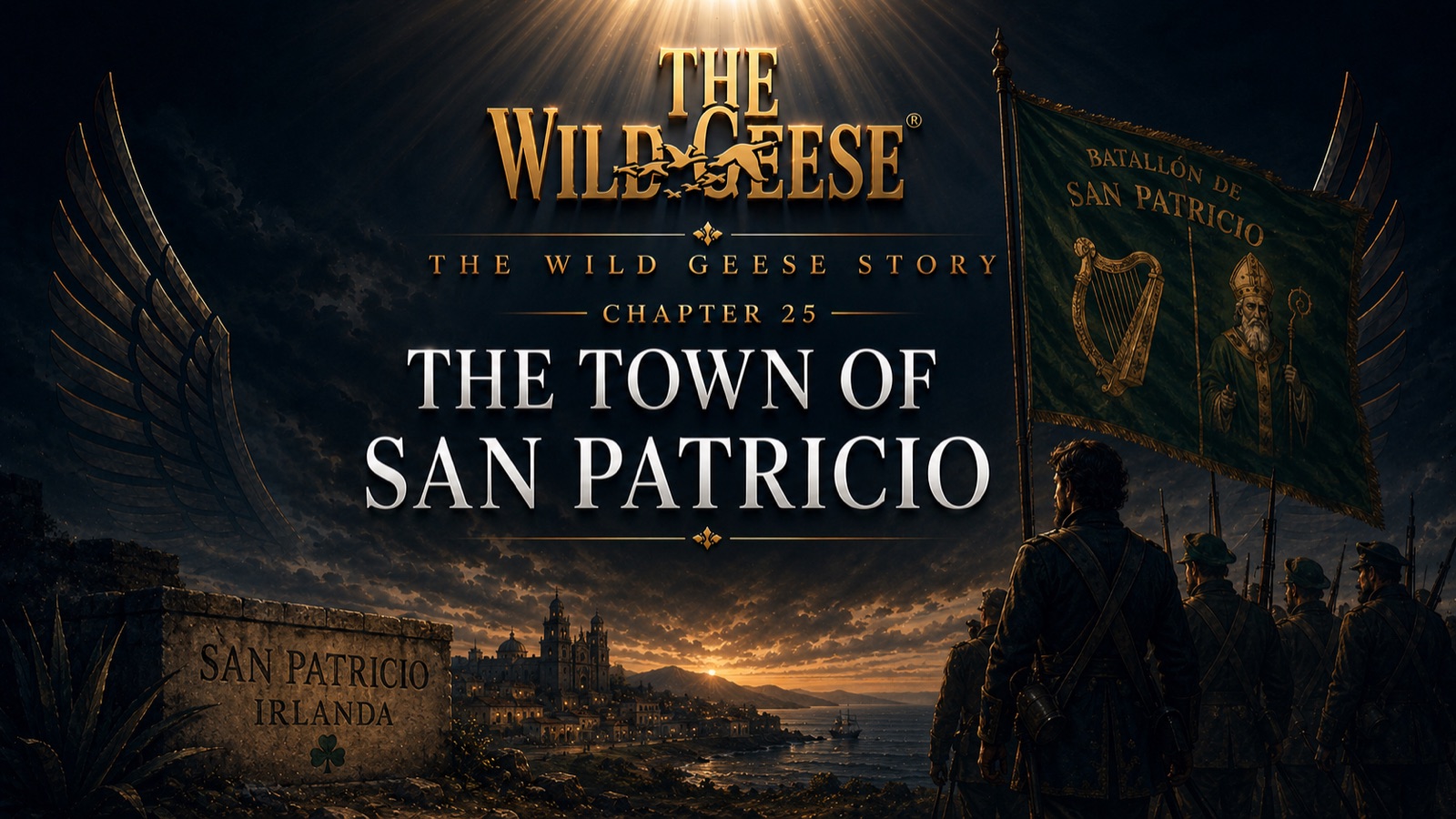
In the state of Puebla in Mexico, there is a town called San Patricio Irlanda. It was established in the colonial period. The Irish who settled there came in waves — some as servants of the Spanish crown, some as adventurers, some as refugees from the various disasters that Irish history produces with such regularity. They came, they stayed, they became Mexican.
The San Patricios are better known in another context. During the Mexican-American War of 1846 to 1848, several hundred soldiers — mostly Irish-born, mostly Catholic, mostly recent immigrants who had joined the United States Army because it was the only employment available to them — deserted to the Mexican side. They formed the Battalion of Saint Patrick, the San Patricio Battalion, and fought under a flag they had made themselves: a green banner with a harp on one side and the image of Saint Patrick on the other.
They had good reasons. They were Catholic soldiers being commanded by Protestant officers in a war against a Catholic country. The Mexican government had offered land grants to foreign soldiers who joined their side. And they had not come to America to fight Mexico. They had come to America to survive.
The San Patricios fought with the ferocity of men who knew they could not be captured. Those who were taken by American forces were tried for desertion and executed — fifty of them hanged, sixteen more flogged and branded — in September 1847.
In Mexico they are heroes. In the United States they are a difficult memory. In Ireland, they are barely known at all, which is the kind of oversight that requires a particular effort to maintain.
