
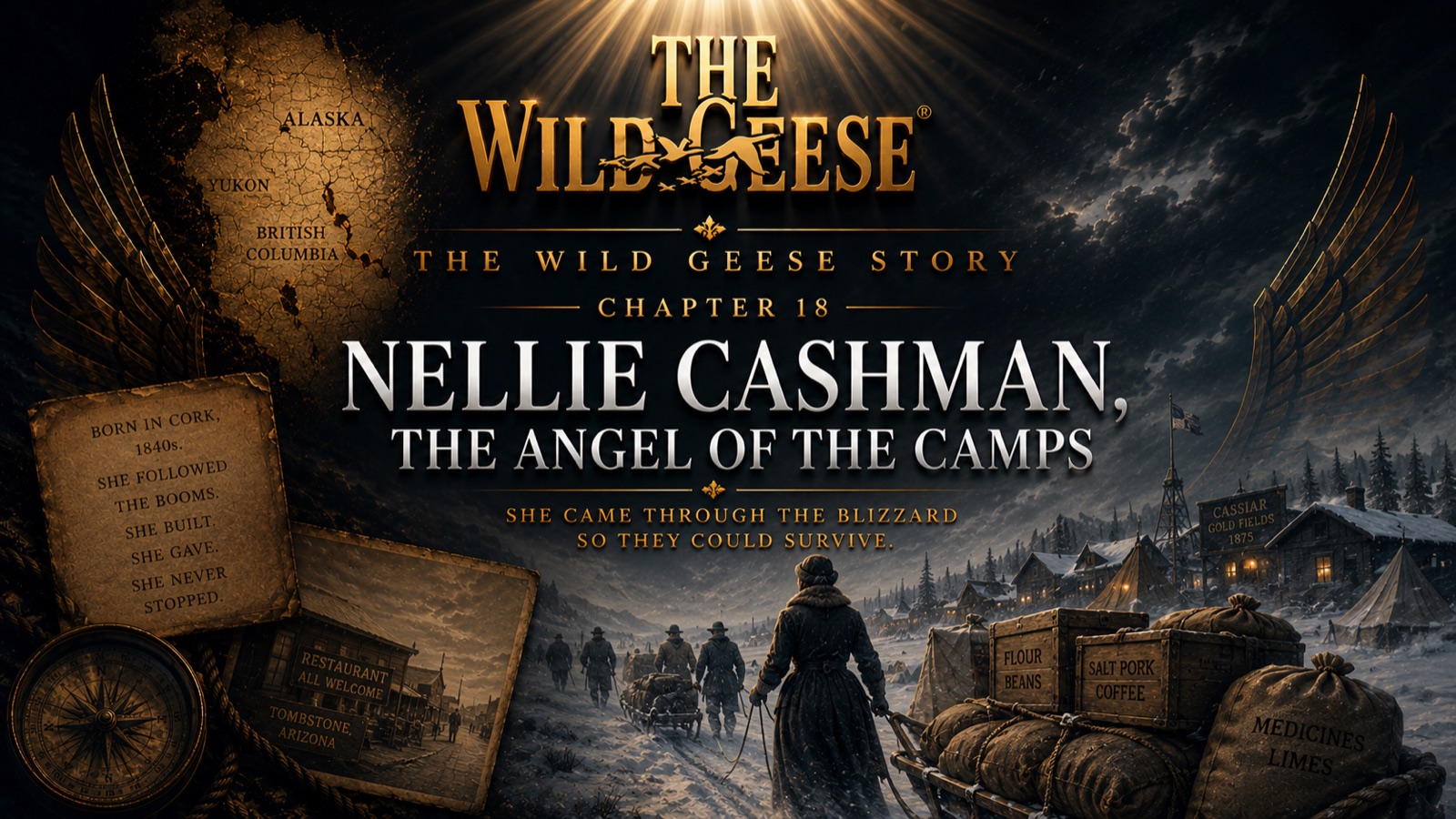
In the winter of 1875, a blizzard descended on the Cassiar gold mining district in British Columbia. Two hundred and fifty miners were cut off from supplies. Scurvy was spreading. The nearest resupply point was weeks away under normal conditions, much further in a Canadian winter.
A thirty-year-old Irish-American woman named Nellie Cashman hired six men, loaded fifteen hundred pounds of supplies onto sleds, and walked in through the blizzard. It took twenty-two days. She arrived in the camp and distributed the supplies herself.
Nellie Cashman was born in County Cork in the 1840s, emigrated to the United States as a child, and spent the rest of her life following mining booms across North America and Alaska — not as a miner but as an entrepreneur, a provisioner, and an indefatigable supporter of the men who worked in conditions that most people preferred not to think about.
She ran boarding houses, restaurants, general stores. She grubstaked prospectors who had nothing and expected nothing in return. She funded Catholic hospitals and churches in frontier towns that had neither. She was known in every mining camp from Arizona to the Yukon. In Tombstone, Arizona, in the same years that Wyatt Earp was building his legend, Nellie Cashman was running a restaurant that fed anyone who came through the door regardless of their ability to pay.
She died in Victoria, British Columbia, in 1925, eighty years old, having spent the previous year prospecting for gold in Alaska. She had not stopped. She was incapable of stopping.
They called her the Angel of the Camps, and for once the name was not an exaggeration.
